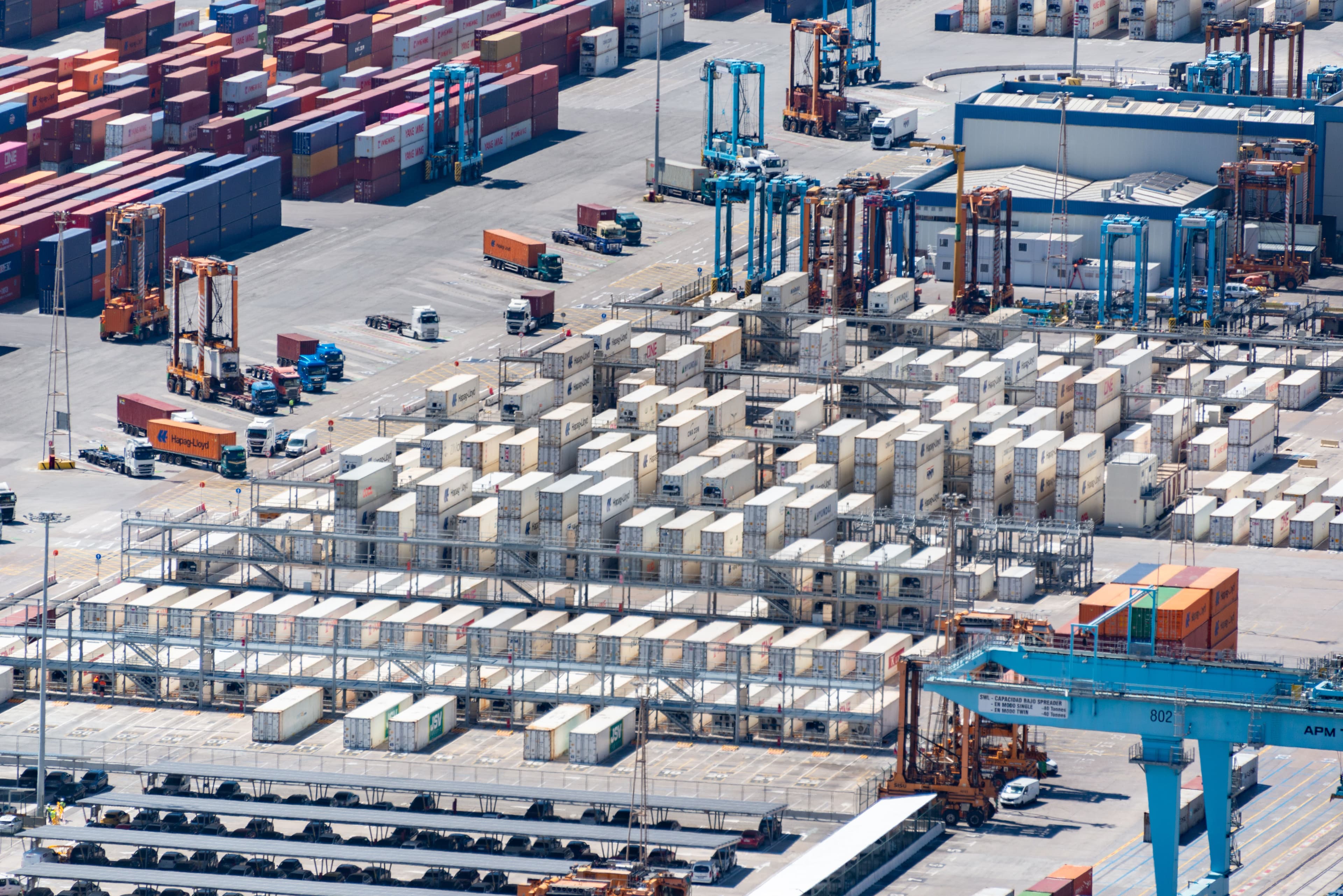
Relai has raised a Series B to accelerate the rollout of its freight coordination layer across major U.S. ports, bringing vessel, terminal, yard, and truck onto a single real-time system.
The round will fund deeper integrations with terminal operating systems and carrier networks, expand the engineering and deployment teams, and bring the platform to new gateways on both coasts. Relai's thesis is simple: the freight supply chain loses time and money not because any single system is broken, but because the systems don't talk to each other.
The raise follows a year of live deployments, including a first end-to-end real-time handoff pilot with a leading carrier and measurable reductions in idle time at partner terminals.
For most of the last decade, the industry's answer to poor coordination was more software: a portal for the terminal, a portal for the carrier, a portal for the drayage provider, each a walled garden with its own login and its own version of the truth. The result was not less friction but more: operators spending their days re-keying data between systems that were never designed to agree with one another. Relai was founded on the opposite premise, that the value is not in another system of record, but in the connective layer between the ones that already exist.
That premise is now holding up in the field. Across its first deployments, Relai has shown that when every party in a port call sees the same live picture, where a vessel is, when a box will be discharged, which truck is assigned to it, and whether the gate appointment still holds, the moves that used to stall simply flow. The Series B is, in effect, capital to turn that proof into shared infrastructure.
The new funding goes first toward integration depth. Every terminal runs a different operating system, every carrier exposes a different interface, and every drayage network carries its own conventions; meeting each of them where they are is painstaking work that does not reward shortcuts. Relai is growing the team responsible for that groundwork so that bringing a new gateway online takes weeks rather than quarters.
A second priority is reliability at scale. A coordination layer is only as trusted as its worst day, and freight does not pause for maintenance windows. Part of the raise is earmarked for the observability, redundancy, and support functions required to run the platform as critical infrastructure, the kind an operations team can build a shift around without keeping a fallback spreadsheet open in the next tab.
The company will also invest in the analytics that turn coordination into measurable outcomes. Early sites have already recorded reductions in idle time and emissions; the next step is making those results legible and repeatable, so a terminal can point to exactly where the hours and the fuel were saved and reproduce it across every lane.
New capital lets Relai move from proving the model at individual sites to operating it as shared infrastructure, a coordination layer that every party in a port call can read from and write to in real time. The company is hiring across engineering, deployment, and operations as it scales, and remains focused on the goal it started with: giving the supply chain the visibility and control to move faster, and cleaner.